Ever wonder what happens after you flush the toilet or turn off the sink? Where does all that water go, and who makes sure it is safely treated before returning to the environment?
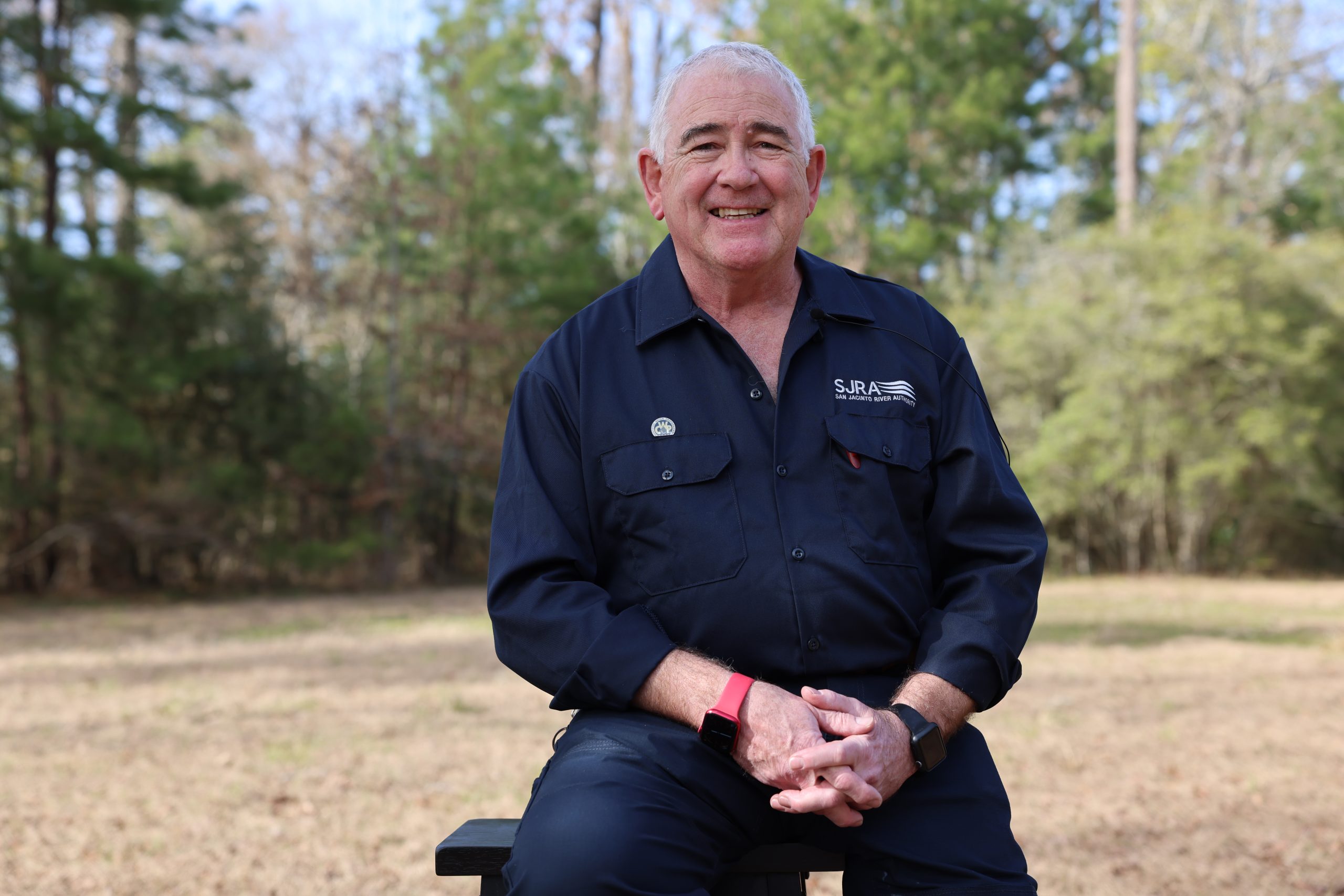
At SJRA’s Woodlands Division, a dedicated team of wastewater professionals works around the clock to make sure wastewater is properly treated and the community’s system continues operating safely and efficiently. One of those professionals was Michael Coyne, a licensed wastewater operator who retired from SJRA earlier this year after helping care for the community’s wastewater system.
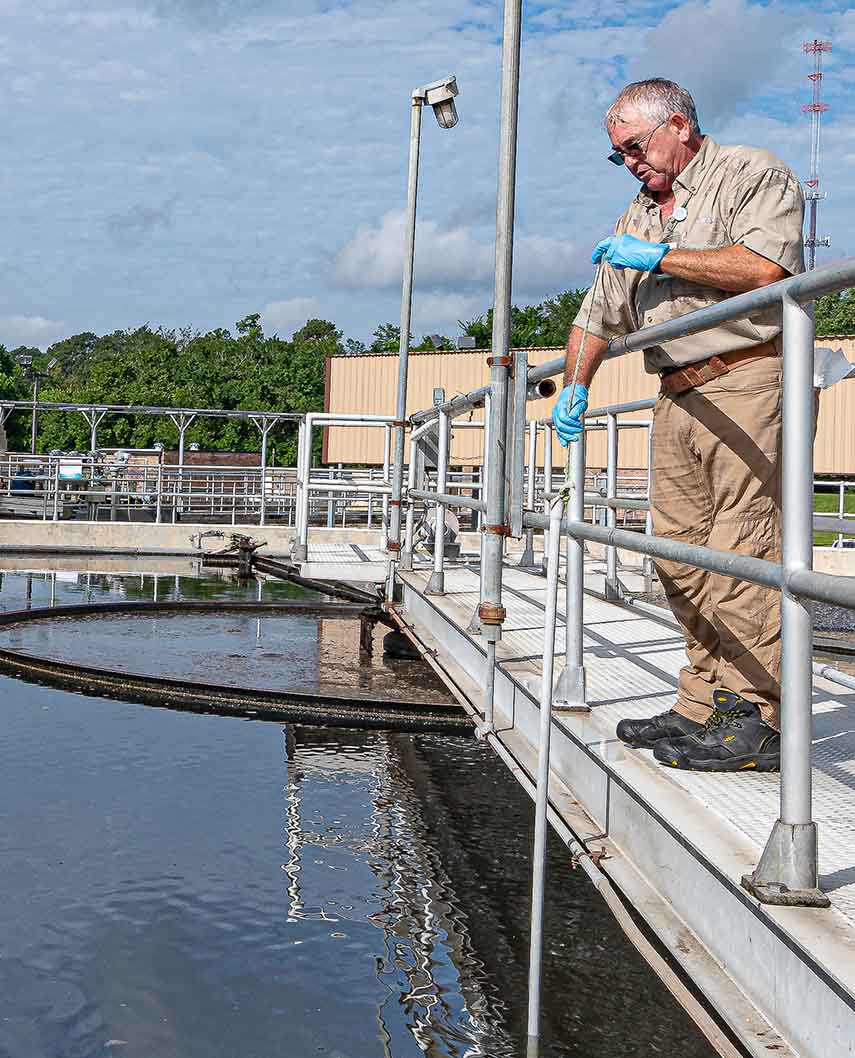
Michael worked at Wastewater Treatment Facility No. 1 (WWTF 1) on Sawdust Road, one of three wastewater treatment facilities serving The Woodlands. As a lead-licensed wastewater operator, he was part of a team responsible for operating the facility 24 hours a day, 365 days a year, including during severe weather events.
On an average day, WWTF 1 treats approximately three to four million gallons of wastewater from homes and businesses throughout the community.
What Happens to Wastewater?
Wastewater arriving at the plant contains much more than water. Operators remove garbage, grit, and items that have been inadvertently flushed or washed down drains before guiding the wastewater through a series of biological and physical treatment processes.
During heavy storms, wastewater facilities can also face increased flows caused by inflow and infiltration (I&I). This occurs when rainwater or groundwater enters the wastewater system through things such as damaged pipes, manholes, or improper connections. Increased flows can create additional challenges for operators and require constant monitoring and maintenance.
Once the treatment process is complete, the water is disinfected and tested through required state sampling before the treated effluent is released into the receiving stream, Panther Branch. Behind the scenes, wastewater operators are constantly monitoring data, adjusting pumps, and valves, moving water through treatment basins, cleaning and maintaining equipment, and infrastructure.
Protecting the Community and the Environment
The work of wastewater operators is essential to public health and environmental protection. By properly treating wastewater and ensuring the water leaving the facility meets strict regulatory standards, SJRA’s operators help protect the community from potential health hazards while also protecting the environment. And because wastewater doesn’t stop flowing, neither does the work. Operators provide this essential service around the clock, including weekends, holidays and during severe weather.
A Career That Makes a Difference
Michael found great satisfaction in the dynamic nature of wastewater operations, particularly the challenge of successfully navigating severe weather events and other situations that require operators to think quickly and work together.
Although Michael has now retired, his years of service are part of the ongoing story of the people who work behind the scenes to keep SJRA’s wastewater systems running.
Their work may not always be visible, but its impact is felt throughout the community every day.